10 Glow-Up Budget Tips Inspired by The Gazelle
Disclaimer: “Creative Fiction / Editorial Piece”. This interview is a fictional and creative piece, written as an imagined conversation for editorial and illustrative purposes. It does not reflect real statements, opinions, or interactions from Marie-Josee Perec . Any resemblance to real interviews, events, or viewpoints is coincidental. This content is intended as creative storytelling and commentary, designed to explore ideas around money, lifestyle, and personal choices in an engaging way. It should not be interpreted as factual reporting or a real interview. As with all content on AfroBudgetinGirl, this piece is designed to encourage reflection and awareness around financial decisions and lifestyle choices.
Last Update : 21 September 2026
Some athletes win medals. Others become part of your childhood, your family memories, and the way you understand what is possible.
For me, Marie-Josée Pérec is that athlete.
I will never forget watching the 1996 Olympic Games with my family. I remember where I was. I remember the tension of the races. And I remember my family shouting:
“Marie-Jo! Marie-Jo! Marie-Jo!”
We weren't simply watching an Olympic champion. We were watching a woman from Guadeloupe conquer the world.
Marie-José Pérec won Olympic gold in the 400 metres at Barcelona in 1992. Four years later, at Atlanta 1996, she successfully defended her 400m title and added gold in the 200m.
Three individual Olympic gold medals. The Gazelle.
But as I have grown older, what fascinates me about Marie-José Pérec is no longer only how fast she ran.
It is her resilience.
Her story includes extraordinary victories, but also injuries, immense pressure, difficult decisions, reinvention and the challenge of building a life after elite sport.
And now, decades after those Olympic victories, another recognition : on 17 September 2026, Marie-Josée Pérec was elevated to Commander of the Légion d'honneur at the Élysée Palace.
It reminded me of something:
Your peak doesn't have to be the end of your story.
And naturally, my AfroBudgetinGirl brain started thinking about money.
What can a career like hers inspire us to think about when it comes to earning, saving, investing, protecting ourselves and preparing financially for the day when our biggest source of income changes?
Before we go any further, one thing is important.
These are not Marie-Josée Pérec's budget tips. I have never had this conversation with her.
These are my own Glow-Up Budget Tips, inspired by her publicly documented career, experiences and statements.
And one of those statements immediately caught my attention.
Years after her Olympic victories, when discussing her finances and investment plans, Marie-Josée Pérec described how she had managed her money during her career:
“J'ai été une fourmi.” An ant.
She had prepared. Now that is where our money conversation begins.
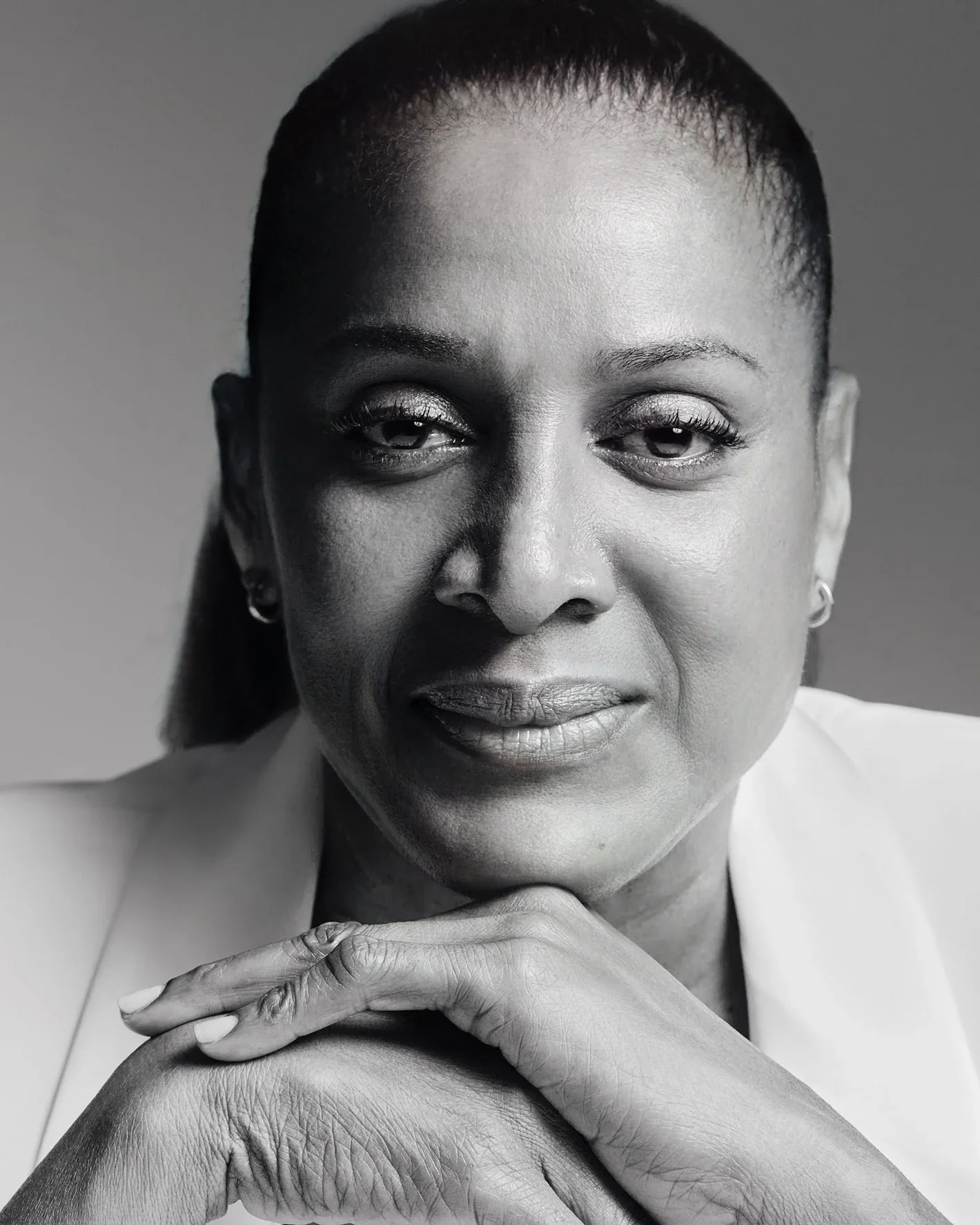
Marie Josee Perec
1. Be the Ant When the Money Is Coming In
In a 2004 interview, Marie-Josée Pérec was discussing a potential hotel investment in Guadeloupe when she explained that she had the financial capacity to consider the project because she had been “une fourmi” throughout her career and had invested carefully.
I love that image. Because when you're earning well, it is easy to believe the money will always come.
It won't necessarily. For an elite athlete, the window can be particularly short.
But the same principle applies to us. A high salary today doesn't guarantee a high salary tomorrow.
A successful business today doesn't guarantee the same revenue five years from now. A large bonus this year doesn't make it recurring income.
One of the biggest mistakes we can make during our strongest earning years is allowing every increase in income to become an increase in lifestyle.
More money comes in. More money goes out. Then when the income changes, the lifestyle remains.
Glow-Up Budget Tip
When your income increases, don't allow your lifestyle to absorb all of it. Increase your savings and investments too.
Be the ant while the sun is shining.
2. Your Peak Income Is Not Your Permanent Income
Barcelona. Atlanta. Sponsorships. Appearances.
There are moments in a career when earning power can accelerate dramatically. But careers have seasons.
Athletes understand this perhaps better than anyone. Performance, injury, age or one unexpected event can change earning potential very quickly.
For the rest of us, it could be redundancy. Illness. Caregiving. Divorce. Relocation. An industry downturn.
Or simply discovering that the career we thought we would have for another 20 years is no longer the career we want.
This is why I talk so much about financial resilience. Don't build permanent expenses around income that may be temporary.
Glow-Up Budget Tip
Build your lifestyle around sustainable income and use exceptional income to strengthen your financial ecosystem.
Your best earning year should leave something behind besides memories of what you bought.
3. Turn Today's Income Into Tomorrow's Assets
Saving is important. But eventually, money needs another job.
Marie-Josée Pérec's comment about being a fourmi wasn't only about keeping money in the bank.
She also spoke about having invested during her career. By 2004, she said she had the financial capacity to consider participating in a hotel project in Guadeloupe.
That gives us an important progression:
Income → Savings → Investments → Options.
Your salary is income. Your bonus is income. Your freelance contract is income. Your business revenue is income.
But the bigger question is: What are you building with it?
Glow-Up Budget Tip
When you receive a bonus, promotion, exceptional contract or other significant increase in income, ask yourself:
How much of this can I convert into an asset?
Because one day the income may stop. What you built with it doesn't necessarily have to.
4. Sometimes Financial Resilience Means Being Able to Step Away
And then there was Sydney 2000. I remember that too.
I remember the tension. I remember the criticism. I remember how much was being said about her.
But I also remember Guadeloupe.
Because in my family, she was still our hero. She was still our Marie-Jo.
I don't think I had ever felt so proud to come from the same place as her.
The world could debate Sydney.
Back home, the woman we had watched make Olympic history was still Marie-Jo.
Years later, she would speak about Sydney with greater distance. Her post-athletics life also became a new beginning; after formally announcing her retirement, she described feeling lighter and able to start a new life.
Looking at that chapter today, I see a financial lesson too. Sometimes life changes before your financial plan is ready for it.
You may need to step away from a career. A workplace. A business. A relationship.
Or simply a situation you can no longer sustain.
And whatever the reason, there is often a financial question sitting quietly behind the decision:
Can I afford to stop?
This is why I don't see an emergency fund as money reserved only for a broken washing machine or an unexpected bill.
I see it as choice money.
Money that can give you time. Money that can give you space. Money that can allow you to make a difficult decision without your next bill making the decision for you.
Glow-Up Budget Tip
Build enough liquidity to give yourself choices when life changes unexpectedly. Sometimes financial freedom isn't having enough money to do more. It's having enough protection to be able to stop.
5. Protect the Person Who Produces the Income
We spend a lot of time protecting assets. Our homes. Our cars. Our investments.
But what about the person generating the income?
You are part of your financial ecosystem.
If your capacity to work changes, your financial situation can change with it.
An athlete's career makes that relationship particularly visible.
But it applies to all of us.
What happens if you cannot work for six months?
How long could your household continue without your income?
What insurance do you have?
What expenses could you reduce quickly?
Who depends financially on you?
These aren't pleasant questions.
But financial protection isn't built by avoiding uncomfortable questions.
Glow-Up Budget Tip
Your financial protection plan should consider emergency savings, insurance, healthcare and periods when you may not be able to earn as you do today.
Taking care of yourself is also financial planning.
6. You Cannot Control Everything. Your Budget Should Know That.
One of the hardest financial lessons is accepting uncertainty. We budget as though life will cooperate. Sometimes it doesn't.
Careers change. Families change. Economies change.
Our bodies change. Relationships change.
Financial resilience isn't about successfully predicting every crisis.
It's about building enough flexibility to absorb one.
That means liquidity. It means insurance where appropriate.
It means understanding your fixed costs. It means knowing where your financial vulnerabilities are. And it means margin.
Glow-Up Budget Tip
Don't create a budget that only works when everything goes right.
Create margin. That margin may one day become the difference between a financial inconvenience and financial hardship.
7. Start Planning for Your Second Career During Your First
One day, the race ends. For an athlete, that reality is impossible to ignore.
For the rest of us, it is easier to pretend it doesn't exist.
We often behave as though our current profession, salary or business will remain unchanged until retirement.
But your career is not your identity. And your current source of income doesn't have to be your only source of income forever.
Marie-Josée Pérec's life after competition has included multiple projects and commitments beyond running. In 2009, she spoke of beginning her “new life” after officially announcing her retirement.
Today, her activities stretch across sport, organisations, speaking, business and other projects.
Glow-Up Budget Tip
Ask yourself regularly:
If my current income disappeared tomorrow, what else could I monetise?
Your experience. Your network. Your expertise. Your intellectual property. Your investments. Your business interests. Your second act shouldn't have to begin at zero.
8. Move From Being Paid to Being an Owner
This one particularly interests me.
Today, Marie-José Pérec is associated with Circle Sportswear not only as an ambassador, but also as a shareholder. She has spoken openly about the uncertainty and risk involved in being an investor.
Those two roles — ambassador and shareholder — represent two very different ways of participating in a business.
One generates compensation for the value you provide. The other represents ownership.
There is room for both. But ownership changes the financial equation.
And this is something I believe we need to talk about much more when discussing financial freedom.
Earning matters. But so does owning.
Glow-Up Budget Tip
As your career develops, look beyond compensation.
Where appropriate, ask whether some of the value you create can eventually translate into investments, equity or other long-term assets.
Don't only earn from the table. Consider whether you can own part of it.
9. Don't Let Your Greatest Achievement Become a Financial Prison
Imagine achieving something extraordinary very young.
What happens next?
There can be enormous pressure to maintain the same lifestyle, status or image long after the economics behind it have changed.
This applies far beyond sport. A big job title can become expensive to maintain.
So can a certain postcode. A certain car. Certain holidays. Certain schools. A certain social circle.
Sometimes we're no longer paying for the things themselves.
We're paying to maintain the appearance of who people think we are.
But your past success should create freedom — not an obligation to continuously prove that you're still successful.
Glow-Up Budget Tip
Allow your financial life to evolve with your circumstances. You don't owe anyone the appearance of success.
10. The Ultimate Glow-Up Is Having Options
This may be my biggest lesson inspired by The Gazelle.
Not the medals. Not the records. Not even the honours.
Options.
The ability to stop. To change direction. To invest. To reinvent yourself. To protect yourself.
To decide that one chapter has ended without believing your life has ended with it.
That is what financial freedom means to me.
Not necessarily never working again.
But gradually reaching a point where money gives you greater control over:
How you work. When you work. Where you work. Why you work.
Glow-Up Budget Tip
Don't only ask:
“How much money do I want?”
Ask:
“What do I want my money to allow me to choose?”
Because the number means very little without understanding the life you want that number to support.
And Then Came Paris 2024
There is one more Marie-Jo memory I need to share.
Paris 2024.
I was watching the Opening Ceremony when Marie-Josée Pérec appeared alongside Teddy Riner to light the Olympic cauldron.
I was almost in tears.
Because for me, this wasn't simply two French Olympic champions being given one of the greatest honours of the Games.
It was one hero beside another hero. Marie-Jo. Teddy. Both from Guadeloupe. Both loved by us.
Two people from the same small island I come from standing together at the centre of one of the biggest sporting events in the world.
And I immediately thought about Sydney.
The criticism. The tension.
Everything that had been said.
And how, through all of it, back home she had remained our Marie-Jo.
Twenty-four years later, there she was. Not on the margins of the Olympic story. At the very centre of it.
Together, Marie-Jo and Teddy lit the Paris 2024 Olympic cauldron. Marie-Jo has since said that being chosen for that moment meant so much to her that, hypothetically, she would have traded her three Olympic gold medals for the honour of lighting it.
Watching it, I felt an enormous sense of pride.
And somewhere inside me, it felt like justice had finally been served.
Not because Paris erased Sydney.
It didn't need to. Sydney was one chapter. It was never the whole story. And perhaps that's another lesson about financial hardship too.
Losing a job is a chapter.
A failed business is a chapter. A bad investment is a chapter. A divorce is a chapter.
A period when you simply cannot continue at the pace everyone expects from you is a chapter.
None of them has to become the title of your entire financial story.
We spend so much time judging ourselves by our hardest chapters that we forget something important:
The story is still being written. Sometimes rebuilding takes years. Sometimes recognition comes much later.
And sometimes the moment that finally makes you look back at the entire journey differently arrives 24 years later, with a flame in your hand.
The Gazelle's Lesson: Your Race Is Longer Than You Think
Marie-Josée Pérec will always be special to me. I can still hear my family shouting:
“Marie-Jo! Marie-Jo! Marie-Jo!”
I remember Barcelona. I remember Atlanta. I remember Sydney — the tension, the criticism and everything being said about her.
I remember Paris 2024 and trying not to cry as two Guadeloupean heroes stood together with the Olympic flame.
And now I see Marie-Josée Pérec being honoured again, decades after the races that first made us scream her name from our living rooms.
Through all those chapters, one thing has never changed for me:
She was still our Marie-Jo. Our champion. Our Gazelle.
I don't think I have ever felt so proud to come from the same place as someone.
Because representation matters.
As a young Black girl from Guadeloupe, seeing a woman from our small Caribbean island stand on the biggest sporting stage in the world and win — not once, but three times — expanded what I thought was possible.
But as a grown woman looking back at her journey, I see something else too.
The medal isn't the whole story.
What you do with the opportunity matters. What you do with the money matters.
How you prepare for the next chapter matters. How you protect yourself matters.
How you rebuild matters. And whether you allow one difficult chapter to define everything that came before and everything that can come after matters.
That brings me back to the phrase that started this entire article:
“J'ai été une fourmi.” Be the ant before you need to be the ant.
Save while you're earning. Invest while opportunities are available.
Protect the person generating the income. Prepare for what you cannot predict. Build assets beyond your career.
Create options. And never assume that because one race has ended, you have finished running.
Financial resilience isn't about avoiding every difficult chapter.
It is about building enough protection, resources and options to decide what comes next.
And perhaps that is the ultimate Glow-Up Budget Tip inspired by The Gazelle:
Run your financial race so that when you finally slow down, your money doesn't have to.
This is an independent editorial article inspired by Marie-José Pérec's publicly documented career, interviews and experiences. I have not interviewed Marie-José Pérec for this article. The Glow-Up Budget Tips and financial interpretations are my own and should not be presented as financial advice given or endorsed by Marie-José Pérec.
👉 Glow Up Budget Tips inspired by Jill Scott
👉 Glow Up Budget Tips inspired by Aya Nakamura
👉 Glow Up Budget Tips inspired by Taraji P Henson
Start Budgeting With Purpose — Free Tools Available Now
Budgeting with Purpose is about more than tracking expenses. It helps you understand your financial reality, identify blind spots, and build long-term clarity.
Two free tools are now available to help you get started:
Free Budget Tracker
The AfroBudgetinGirl Budget Tracker helps you see your money clearly, plan monthly or yearly, track irregular expenses, and prioritise actions using the Action Priority Matrix.
200 Questions Workbook Extract (Free)
Some financial risks don’t appear in spreadsheets. This workbook extract helps you uncover blind spots, understand what’s driving your decisions, and map those insights into numbers using your budget.
👉 Free Download : Budget Tracker and workbook extract
The Money Design Session
These tools introduce the Money Design Session — a practical way to map your financial ecosystem, identify patterns, and strengthen your foundation with intention.
Here’s what to do:
List every part of your financial environment — from family and work to culture and media.
Analyse how each one influences your mindset, habits, and goals.
Identify patterns and blind spots.
Strengthen your foundation by aligning your money with your true objectives.
This is how budgeting becomes a tool for direction — not restriction.
Want Early Access?
The Budgeting with Purpose Masterclass is in development.
👉 Subscribe to receive:
practical guidance to live intentionally — financially and personally
Budget for the Life You Intend to Live
I’m AfroBudgetinGirl, and this is my Diary — where every story matters because your story matters.
Through real experiences and true lessons, I help you question, plan, and protect your financial journey.
Budgeting with purpose transforms your money into a tool for independence and peace. It gives you the power to say “yes” to what matters — and the courage to say “no” to what doesn’t.
Because when we plan with purpose, we don’t just survive life’s challenges — we thrive through them.