Why Financial Literacy for Kids Starts at Home
Disclaimer . This article is for educational purposes only and does not constitute financial, legal, or tax advice. It reflects lived experience and professional insight to help you better understand your financial decisions.
Updated on Wednesay 5th August 2026
Where the Money Conversation Truly Begins
Financial literacy for kids is more than just counting coins; it’s about building awareness, emotional intelligence, and confidence with money. And ultimately, it’s about financial protection — because children who understand money grow into adults who can structure and protect it.
Today, children are growing up in a world where money is often invisible, transferred with a tap or swipe, stored in apps, or accessed with a phone. For them, the concept of 'having' and 'spending' is almost abstract.
That’s why I wrote my eBook, 'How to Be a Money Smarty', to help parents guide their children through this new financial landscape with confidence and calm.
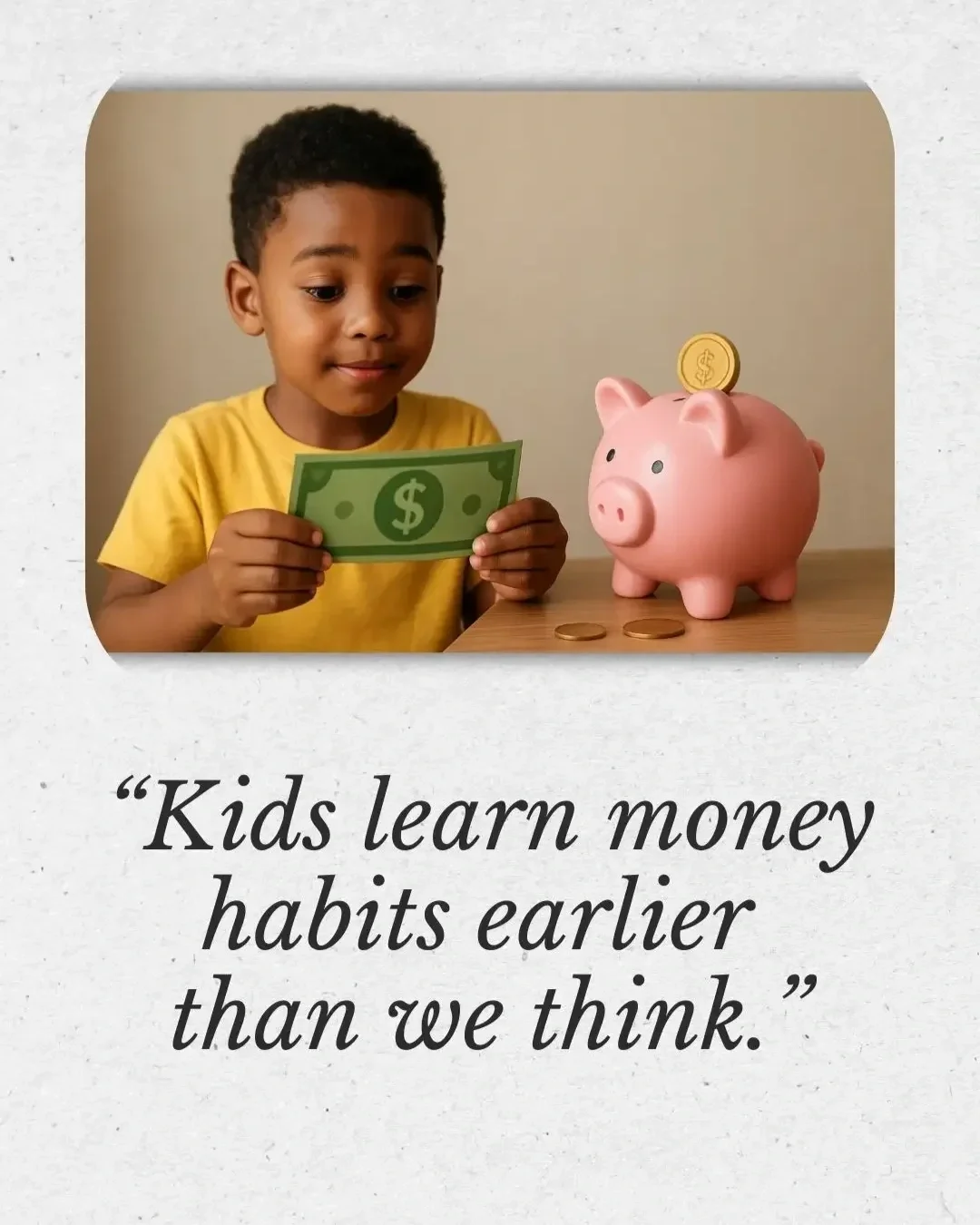
The Moment That Redefined My Money Talk
Every afternoon, when I pick up my son from school, he often asks, 'Mommy, can we go to the café for a croissant?'
Now, I reply without hesitation: 'Not today doudou, we’re saving for something bigger.' There’s no guilt or awkward pause anymore, because money conversations have become natural in our home. I’ve worked intentionally to make them that way.
I grew up in a time without credit cards, digital wallets, or online payments. Back then, you could see and feel money. You could count it, hold it, and understand when it was gone.
But the ecosystem our children live in today is radically different. Payments happen in seconds, credit feels endless, and the connection between effort and spending can disappear overnight.
This is why understanding your financial ecosystem matters — because the environment shaping our children’s money habits is radically different from the one we grew up in.
That’s why I push harder now to talk about money with my kids. Not because of fear, but because understanding the ecosystem around money is essential for confidence and control. Money shouldn’t be a mystery to our children. It should be a language they speak fluently.
In many ways, this is where Budgeting With Purpose truly begins — not with spreadsheets, but with early awareness and intentional conversations at home.
The Global Movement for Financial Literacy
Thankfully, the world is catching up. There’s a growing global movement to bring money education into classrooms and families alike.
In the United Kingdom, a new national curriculum is being introduced to teach practical life and work skills , including money management, to all students. This initiative aims to ensure that every young person graduates with the tools they need to thrive in real life, not just on paper. Primary schools will receive financial education from 2028. (GOV.UK – New Curriculum to Give Young People the Skills for Life and Work)
In Dubai, the Knowledge and Human Development Authority (KHDA) is looking at implementing similar financial literacy programs starting from Grade 8, recognizing that economic awareness must begin early if we want financially capable adults later.
And in France, initiatives such as the exhibition “LES MYSTÈRES DE L'ARGENT”at La Cité de l’Économie in Paris are transforming money learning into immersive experiences. Children can explore interactive exhibits that show how money flows through everyday life; earning, spending, saving, and investing, in a tangible, memorable way.
Together, these efforts show that financial literacy is no longer optional. It’s becoming part of the social fabric. The ecosystem is changing fast, and education must change with it.
Why Parents Still Struggle and How We Can Relearn Together
Even though I now speak about money openly with my son, I understand why many parents still hesitate. Money touches emotion, history, and identity , and sometimes, unresolved feelings.
In my eBook 'How to Be a Money Smarty', I explore this deeply in Chapter I: Planting the Seeds and Chapter II: Money Talk. These chapters help parents reflect on their own relationship with money, because before we can teach it, we need to understand how we feel about it ourselves.
My mother taught me about money early on, not through theory, but through scarcity. She showed me how to stretch every coin, how to plan, and how to save. Those lessons made me resourceful but also cautious. For years, I carried that scarcity mindset. The constant feeling that there might never be 'enough.'
Understanding those inherited money narratives is something I explore more deeply in Understanding Your Financial Ecosystem — because our childhood experiences silently shape our adult financial behavior.
As an adult, I’ve learned to make peace with that past and to start with a clean slate for my children. I no longer teach money from fear . I teach it from freedom.
And here’s something I’ve learned along the way: even highly educated, successful parents have emotional money habits they don’t fully understand. This book helps uncover those patterns. The invisible 'why' behind how we spend, save, and talk about money. So we can model healthier behaviors for our kids.
Money boundaries don’t begin in adulthood — they’re modeled early. I explore this dynamic more personally in My Money, My Aunty, My Friend.
A World Evolving, A Conversation Expanding
The global conversation around money is expanding and it’s long overdue.
We live in an ecosystem where credit is easy to access but difficult to manage.
In fact, the pressure of instant spending and digital influence is something I’ve unpacked in An Honest Conversation About Why Your Budget Feels Tight— because environment influences spending more than discipline alone.
Purchases happen instantly, often without physical money changing hands. Children see digital transactions daily but rarely understand the work behind them.
This digital disconnect makes it even more vital for parents to bring money lessons into the home. Financial literacy isn’t just about math or budgets. It’s about emotional intelligence, critical thinking, and long-term wellbeing.
By normalizing money talks early, we prepare our children for a world that moves fast, but demands mindfulness.
Introducing 'How to Be a Money Smarty'
'How to Be a Money Smarty – Mastering the Mystery of Money with Your Child' is a practical, heart-centered guide for parents who want to raise financially confident children.
Inside, you’ll find:
• Simple, relatable ways to start money conversations
• Scripts and examples for answering kids’ toughest money questions
• Tools to teach saving, spending, and earning
• Guidance on emotional awareness and gratitude
It’s more than an eBook. It’s a framework for transforming how your family thinks and feels about money.
For families ready to begin, the Money Smarty Starter Kit is the perfect first step. It includes:
• The Money Cycle – a full chapter from the eBook, teaching the basics of earning and spending
• Two printable templates – My Chores Chart and My Money Tracker
Together, they help you make financial education practical, visual, and fun.
👉 Download your free Starter Kit.
👉 Ready for the full version, download “How to be a Money Smarty?”
Final Thoughts
Talking about money at home should feel as normal as talking about dinner or homework. When children understand that money is part of life, not a source of stress or silence, they grow up confident, independent, and grounded.
Our world is evolving fast. The money ecosystem is changing faster than ever. But with love, transparency, and the right tools, we can help our children not only keep up, but thrive.
Let’s raise a generation that doesn’t just spend or save, but understands.
Let’s raise Money Smarties.
Budgeting With Purpose transforms your money into a tool for independence and peace.
About Me
I’m AfroBudgetinGirl, and this is my Diary — where every story matters because your story matters.
Through real experiences and true lessons, I help you question, plan, and protect your financial journey.
Budgeting with purpose transforms your money into a tool for independence and peace. It gives you the power to say “yes” to what matters — and the courage to say “no” to what doesn’t.
Because when we plan with purpose, we don’t just survive life’s challenges — we thrive through them.
If this story resonated with you, keep exploring the Diary — there’s more here to support your financial clarity, boundaries, and purpose.
Disclaimer. This content is shared for educational and informational purposes only. It is based on a combination of:
lived experience
professional background in finance and tax
real-life situations observed or shared in confidence
Some details may be adapted to protect privacy, but the underlying lessons remain real. This content does not constitute financial, investment, tax, or legal advice, and should not be relied upon as a substitute for professional advice tailored to your specific situation. Every financial situation is unique. What worked — or did not work — in one context may not apply in another. You should always consider your own circumstances, responsibilities, and goals before making financial decisions. This platform is designed to help you:
reflect
build awareness
identify potential financial blind spots
👉 Not to replace personalised professional guidance.